Your guide to what happened on the Hill this week and why it matters.
|
|
 |
April 17, 2026
|
|
|
|
|
|
|
|
|
|
|
|
|
The numbers are now on Carney's side, what will he do with the power?
Prime Minister Mark Carney is now leading a majority government.
Sweeping all three of the federal byelections, the Liberals have secured 174 of the 343 seats in the House of Commons, locking in a tighter grip on power for the foreseeable future.
So what does that mean in practice, and how is it all going over with the opposition parties?
Here's what you need to know.
|
 |
|
The week that was |
|
Nearly a year after the Liberals' minority government win and on the heels of courting five opposition MPs to cross the floor, Carney's grip on power got tighter on Monday.
In the Liberals' first win of the night in University-Rosedale, Ont., candidate Danielle Martin won the party's 172nd seat in the House of Commons.
Her victory put the prime minister in a steadier, more predictable position in Parliament, though it was not the last Liberal win of the night.
Moments later, CTV News projected that Doly Begum – who stepped down as deputy leader of Ontario’s NDP to run for the Liberals – won her Scarborough Southwest seat.
In Terrebonne, Que., where a special ballot was used due to the number of candidates, Liberal candidate Tatiana Auguste won a nail-biting race that was called just after midnight.
Monday's results put the Liberals at 174 seats, the Conservatives at 140 seats, the Bloc Quebecois 22, the NDP six, and the Greens one.
The last time a federal political party formed a majority was former prime minister Justin Trudeau's Liberals in 2015, before being reduced to a minority in 2019, a parliamentary posture the party held in every election since.
Political insiders that were part of CTV News' special coverage, characterized the Liberal Party's turnaround from the end of the Trudeau era, as stunning. They widely attributed it to Carney's specific brand of leadership and his ability to attract politicians from across the political spectrum.
Though, the way the prime minister has cobbled this majority together – while entirely legitimate under Canada's political system – has not sat well with the opposition parties and the voters who supported them in the 2025 federal election.
The day after the byelections, I dug into the fallout from the results for the opposition parties – with the lead being that despite being dealt double-digit defeats in the three federal byelections, Conservative Leader Pierre Poilievre says he has no plans to resign.
For a full detailing of the vote breakdowns for the opposition parties, check out my piece here. |
|
 |
|
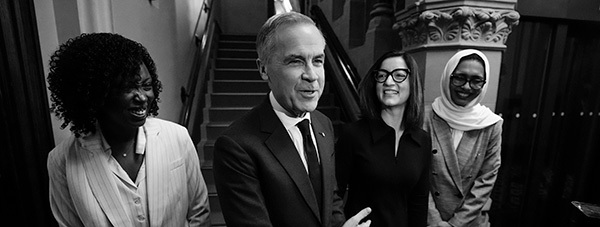
On byelection night, Carney signalled his intention wouldn't be to spike the football, but rather to get back to business.
The next morning, he announced his first order as a majority prime minister would be to temporarily suspend the federal fuel excise tax on gas and diesel starting next week.
According to the federal government, the tax suspension is expected to reduce the cost of gas by 10 cents per litre on regular gas, and four cents on diesel.
During a comprehensive post-announcement press conference, the prime minister fielded a series of questions about how he intends to leverage his new 174-seat parliamentary standing.
Here's a quick recap in case you missed the myriad headlines: Carney isn't considering calling an early election – meaning the next election may not come until 2029 unless he reneges down the line – nor is he plotting a cabinet shuffle.
The prime minister also said he plans to use his majority to ensure debates don't drag on unnecessarily in the Commons or at committees, and to pass legislation without needing an opposition party to agree with it.
It did not take long for Poilievre's Conservatives to balk at Carney's plans to reconfigure the makeup of House of Commons committees to reflect their new Liberal majority standing.
On Wednesday, after Carney and his three new MPs entered the Liberal caucus to a raucous reception, Government House Leader Steven MacKinnon confirmed he intends to advance changes that would increase the number of Liberals that sit on parliamentary committees.
"I think there's a generally accepted principle that committees reflect the composition of Parliament," MacKinnon said. "You can expect news on that not too far away."
On Thursday, Conservative House Leader Andrew Scheer told reporters that he thinks the House is now in "unprecedented territory," and accused Carney of trying to "use power to gain more control."
"What we're saying today is, let's uphold the tradition that the committee makeup is reflective of the results of the ballot box," Scheer said. "We're calling on Liberals not to stack the deck."
Scheer argued that traditionally the makeup of committees is negotiated through consensus based on the results of the general election and that what the Liberals are eyeing would "be violating decades of parliamentary convention."
He said MacKinnon has yet to reach out to consult the Conservatives on any proposed changes that would likely reduce the number of opposition MPs sitting around each committee table.
The Standing Orders of the House of Commons state that: "party representation on committees reflects the party standings in the House."
Conservative MPs at the same press conference also raised concerns about Liberals filibustering the ethics committee to try and avoid having the finance minister testify about the Alto high speed rail project.
CTV News then asked why it's within their rights as opposition to filibuster, but not acceptable when the Liberals do it. Scheer replied by saying that when Conservatives filibuster it is to try and improve "bad Liberal legislation," whereas in his view, the government uses this delay tactic to dodge accountability.
As of Friday, there are no more than seven sitting weeks left before the House rises for the summer. |
|
|
|
|
|
|
Not to be missed |
|
 |
|
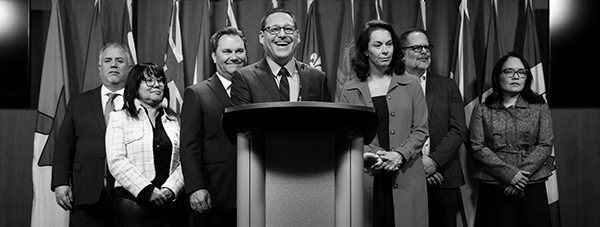
NDP gets House funding, pushes new policyThe federal NDP caucus has had its parliamentary funding reinstated a year after losing official party status in the April 2025 general election. The funding is used for parliamentary functions such as research and communications staff who help prepare MPs for work in the House and speeches. It would also apply to the research, drafting, and writing of private members' bills. The unanimous decision was made by the Board of Internal Economy (BOIE), the governing body of the House of Commons, which includes MPs from each major party and other House officials. As colleague Spencer Van Dyk reports, former NDP interim leader Don Davies – and current parliamentary leader – said the funding will enable the caucus "to better fulfill our parliamentary duties and reflect the 1.2 million Canadians who voted for us in the last election." Who's not getting this funding? The party’s new leader, Avi Lewis, who is not a sitting member of Parliament. Despite that, he hit the Hill this week pushing for the government to ban a practice known as surveillance pricing – an idea, according to the NDP, that the Liberals rejected. Liberals to table spring economic update April 28The federal government is set to table its spring economic update on April 28, the one-year anniversary of the Liberals' general election win, Finance Minister François-Philippe Champagne told the House of Commons on Tuesday. It will be Carney's first spring snapshot since his cabinet flipped the release schedule for its budgets and fiscal updates. The document will give the latest accounting of federal government spending and policy agenda items since last November's budget. "This is going to be a plan that is going to help families," Champagne said during question period Tuesday. "It's going to help our industry. It's going to help our nation … to prosper." Finnish PM on Trump, prospect of Canada joining EUAnd, Finnish President Alexander Stubb says he's "the most pro-American president in Europe," despite U.S. President Donald Trump’s persistent criticisms of Western allies and global trade system disruption. Stubb made the comments in an interview on CTV Question Period while he was in Ottawa for the first visit to Canada by a Finnish president in 12 years. In the interview, which will air Sunday, host Vassy Kapelos asked Stubb what he believes are the causes of the ongoing shift in the global order. In response, he cited the U.S. administration defining itself as MAGA, among other reasons. He was also asked about headlines he’s made musing about the possibility of Canada joining the EU. Stubb sought to temper his position. "I think we live in exceptional times, and I'm an EU nerd. … I hope that Canada and the European Union can be as close as possible. What that then means in the long run is for the Canadian people to decide, for the European Union to decide," he said, adding that if it was up to him he would "embrace" it. "I think you guys are great, and you would slot into the system like nothing before." |
|
|
|
|
|
 |
|
|
Quote of the week"Canadians have placed their trust in this government. We have a responsibility to live up to that, work every day to implement our policies, the right plan for the country, to grow the country, and that's what we're going to do. Not thinking ahead beyond that… we're here to do a job. We're doing a job. We didn't go out and celebrate last night. We were working last night on finishing touches on this, other aspects of the spring economic statement, which you'll see in due course." - Prime Minister Mark Carney on Tuesday, after being asked if he is a "one-and-done" prime minister. |
|
|
|
|
|
|
|
You are subscribed to CTV News as gjagjeet610.worldwin@blogger.com
You have received this message from CTV News, a Bell Media property.
Bell Media Inc.
9 Channel Nine Ct,
Scarborough, ON M1S 4B5
You can contact us at 1-866-690-6179
NOTICE: Email service providers’ one-click unsubscribe links may not always function. To manage your CTV News message preferences, please visit our preference center or use the communications preferences link at the bottom of our emails.
Privacy Policy | Manage Subscriptions | Unsubscribe
© 2022 Bell Media All rights reserved. |
 |