| |
Newsletter Our monthly update for everyone interested in health and social care | |
 Give your feedback on our draft assessment frameworks Our proposals in our consultation 'Better regulation, better care' included moving away from a single assessment framework to separate frameworks that are more specific and relevant to the health and care sectors that we regulate. We considered the responses and listened to feedback, which showed overwhelming support for this proposal, and have therefore developed an initial 4 draft sector-specific assessment frameworks for: - adult social care
- mental health care
- primary care and community services
- secondary and specialist services (hospitals)
We'd now like to hear your views about the draft frameworks. What we hear from you will be used to further refine each framework ahead of testing this summer. | | |
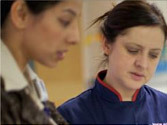 Join us! Work for CQC CQC staff have a wide range of skills and work across many disciplines. Current vacancies include: - Chair of Independent Care (Education) and Treatment Programme
- Lawyer (Inquiries and Investigation Team)
- National Professional Advisor – Surgery
- Specialist Advisor – General Internal Medicine Consultant Doctor
Benefits include generous leave entitlement, NHS or Nest pension schemes and a wide range of employee discounts. Most roles offer flexible locations with the choice to be home-based. See the individual job listings for more information. |  Next steps for our assessments of local authorities In 2022, we were given new responsibilities to check how local authorities were meeting their responsibilities under the Care Act (2014). In December 2023, we started an assessment programme for all 153 local authorities in England with adult social care responsibilities to set a baseline for this work. All of our on-site assessments are now complete. The final reports are due to be published by early summer, taking into account the need to pause publication during the local government pre-election period. Once this is done, we will publish a report to highlight our findings from the baselining period, using our independent voice to draw attention to key themes and the successes and challenges across adult social care. Looking ahead, we have engaged with government, partners, local authorities, people who use services and carers, and organisations that represent them to develop our approach to assessments of local authorities. Although still subject to government approvals, our proposed assessment approach has been designed to introduce a more flexible and relational approach.
New local authority assessments published Recent reports published as part of the baselining programme include: Each report looks at 9 areas spread across 4 themes to check how well each authority is meeting its responsibilities. Areas are given a score out of 1 to 4. A score of 1 is given when evidence shows significant shortfalls for this area, and 4 when evidence shows an exceptional standard is being met. |  What we found when looking at gambling treatment services In February 2023, the Gambling Commission and GambleAware asked us to inspect 14 organisations that provide gambling treatment services as part of the National Gambling Support Network (NGSN). These services provide treatment and support for people experiencing gambling harms in England, Scotland and Wales. We inspected the 14 services provided through the NGSN to assess whether they are delivering good quality, accessible and effective care, treatment and support. Following an initial period of scoping, piloting and developing a bespoke assessment framework, we carried out the 14 assessments between May 2025 and March 2026. We found that the services delivered care that was safe, effective, caring, responsive and well-led. People experiencing gambling harms were able to access the services when they needed them, and received person-centred treatment and support that met their needs. Services supported people to stop gambling, reducing the impacts of addiction on themselves and their friends and family. They also supported others, such as family members. |  Do you work in health or social care? Sign up to our other newsletters and follow us on LinkedIn to make sure you always get the latest information from us. | | |